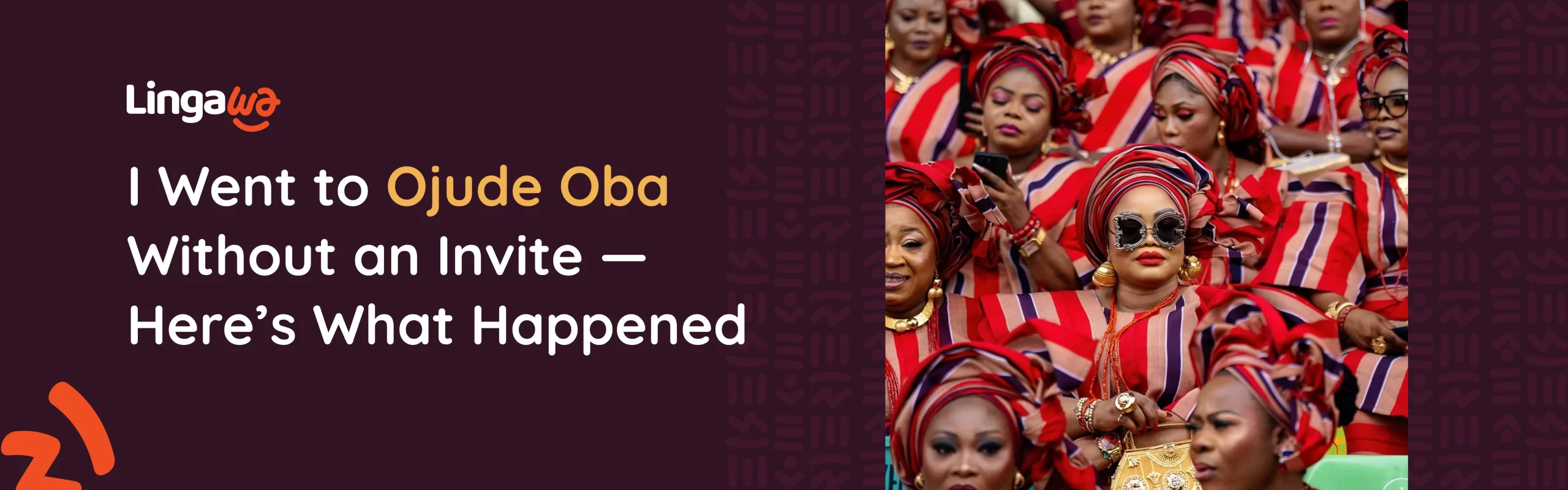
Curious about attending Ojude Oba for the first time? Wondering if you can experience Nigeria’s most iconic cultural festival without a VIP invite or press pass? You’re not alone.
Ojude Oba is one of the biggest traditional festivals in Nigeria — a dazzling display of Yoruba heritage, fashion, and pride held annually in Ijebu-Ode. This year, our social media manager, Aisha, decided to attend her first Ojude Oba festival in Ijebu-Ode. No official access, no insider privileges — just a deep desire to reconnect with her roots and experience the festival firsthand.
This is her story.
Touchdown in Ijebu-Ode
The festival was set for Sunday, but my brother and I arrived in Ijebu-Ode on Saturday to explore the city ahead of the big day. With my mum being from Ijebu-Ode, I’d always felt a strong pull to connect with my Ijebu roots. This trip felt like the perfect chance to experience both the town and the Ojude Oba festival for the very first time.
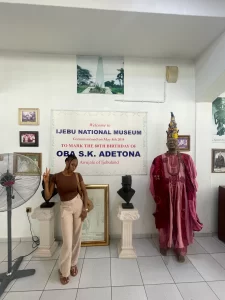
Once we arrived, the adventurer in me kicked in. We headed straight to the National Museum, where the first surprise of the trip was waiting. The museum compound turned out to be the very same grounds where the festival would take place the next day. So, not only was I getting a history lesson, I was also getting a sneak peek of the festival setup.
Turns Out My Ancestors Were Cool Too
The museum staff welcomed us warmly, and for an entry fee of ₦1,000, we stepped into a space filled with centuries-old artifacts. My brother immediately got swept up, bonding with relics from our past, while I started picking up some fascinating facts.
One of my favorite discoveries was that “Ijebu-Ode” is basically what Gen Z would call a ship name. It’s a combination of the names of two of the town’s founders: Ajebu and Olode. Apparently, our ancestors were mashing names together long before it became a cool thing.
One of the most surprising things I learned was that Ijebu has had three female Awujales in its history. The Awujale is the traditional ruler of Ijebu-Ode — essentially the king — so hearing that women once held that title felt revolutionary.
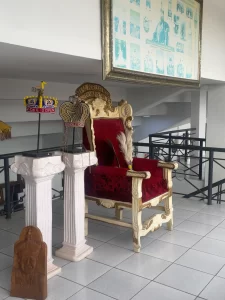
In a country where female leadership is still seen as rare, it was a powerful reminder that women have always led, even if history doesn’t always say their names.
I met the museum’s curator, a very lovely and welcoming woman, along with her husband, who I could have sworn was Jamaican when he first walked in. To my utmost surprise, he opened his mouth and fluent Yoruba flowed out, and before I knew it, I was greeting him: “E kaasan, sir.” During our conversation, I learned that they both hold respected chieftaincy titles from the king—he as Otunba and she as Yeye Otunba of Ijebu Ode.
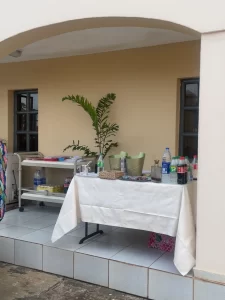
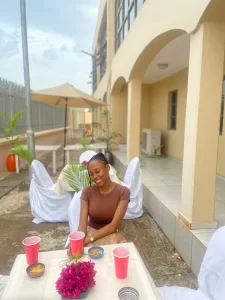
Before leaving, I was told that the museum offered refreshments to visitors outside. They served Chapman and some snacks in a beautiful area just outside the front door. It was the first time I had received such hospitality at a museum, and the experience was a perfect ten out of ten.
Reality Check at the Arena
Of course, I had to walk over and see the festival setup for myself. It was such a lucky surprise to find out the museum and festival shared the same venue. I made my way to the arena, and I was immediately in awe. This was the very arena where Niyi Fagbemi had taken those stunning images that went viral during last year’s festival.
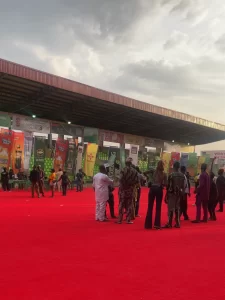
I took it all in and tried to figure out the perfect spot to watch from the next day. Curious, I approached a staff member who was setting up and asked about seating. Their response caught me off guard: “This area is not for you. It’s for members. You won’t be able to get in here tomorrow.”
Excuse me?
So where were regular folks, especially those who had traveled from far and wide, supposed to sit? They made it clear that the bleachers were reserved only for members who would be showcasing their attire. It was disappointing to learn that little had been arranged for visitors like me. But no matter what, I had come all the way to Ijebu and I wasn’t going to leave without experiencing the heart of Ojude Oba. I was determined to make it work.
Mission Impossible?
It was 7:00 a.m. on Sunday morning, the day of Ojude Oba, and I was a girl on a mission to get into the very stadium I had been told I would not be allowed to sit in.
I left early in hopes of gaining access to the stadium. On the way to the venue, main roads were blocked. Our bike rider had to navigate back routes. Area boys were closing their community gates and refusing entry to anyone who did not pay. It was clear something serious was happening in town that day.
By the time we reached the gates at 7:30 a.m., people were already locked out. I saw people dressed in heavy attire and jewelry begging to be let in, and I realized just how strict entry was. I recognized someone I had met at the museum the previous day, and they tried speaking to security on my behalf, but the guards were not having it. At that point, I honestly started to consider leaving.
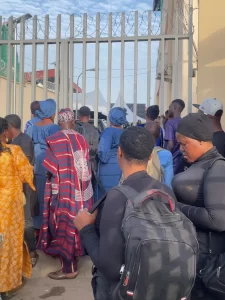
But I decided to hold on a little longer, just in case some sort of miracle would happen.
Then suddenly, a wave of people started sprinting toward another gate. I didn’t ask questions, I just followed, and by some stroke of luck, they were letting people through. And just like that, I was in. I made it into my very first Ojude Oba festival.
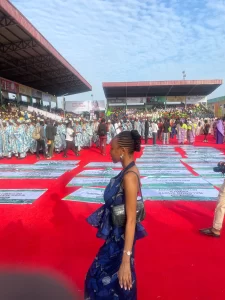
A Front-Row Seat to Yoruba Pride
It was now 8 a.m. at the time I made it in, members were still arriving, and the stadium was not yet full. A band played on the red carpet while the space filled with people dressed in vibrant, colorful attire. After soaking in the beauty and grandeur, taking in the scene, and a few photos, my brother and I climbed up to the bleachers. There, we found a very small section for non-members. This turned out to be very lucky, thanks to our early attendance, and that was how I secured my seat in the arena (shoutout to all the voices that said I would not make it).
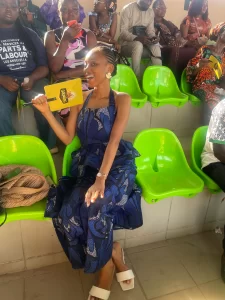
From where we sat, the view was incredible. If there is one thing Yoruba people will always do, it is understand the assignment. The fashion? Vibrant. The energy? Immaculate. The pride? So real you could feel it in the air.
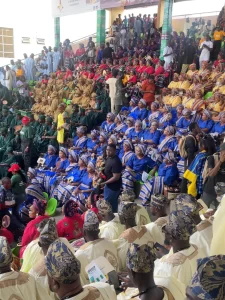
We stayed seated for hours, watching wave after wave of guests arrive. Everyone came dressed in their finest traditional wear, proudly representing their age grades and families. Paparazzi moved through every corner, trying to capture it all.
At around 11:30 a.m., the sun was blazing and the stadium was packed. I realized that beyond the fashion, there was not much structure to the experience unless you were on the red carpet itself. That was where the parades happened — the horses, the fashion, the real movement. From our seats, it was hard to catch more than glimpses of the action through the crowd.
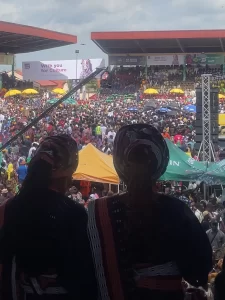
We felt ready to wrap up the day, and as we made our way toward the exit, the sheer density of people caught me off guard. Within seconds, I found myself face to face with a horse. The space was just that packed. It became clear that the organizers had not anticipated such a massive turnout.
The fact is, Ijebu is global now. This is no longer just a hometown celebration. It is a cultural spectacle with real tourism potential. A lot of people had attended from all over the world. I just hope that next year brings more planning, more structure, and enough room for everyone to enjoy it the way it deserves.
One Last Mission
Before travelling back home, I had one final task: AMALA. I found a spot near the garage, sat down to enjoy a good plate of amala, ewedu, and gbegiri, while I reflected on everything.
My first Ojude Oba wasn’t perfect, but it was memorable. And for me, it marked a personal milestone: reconnecting with my roots beyond just ancestry. And in many ways, it mirrors what I do at Lingawa: helping people bridge the gap between culture, language, and lived experience.
Would I do it again? Absolutely.
Would I come better prepared next time? Also yes.
And if you want the full visual rundown, check out my vlog from the festival — I captured it all.