- .
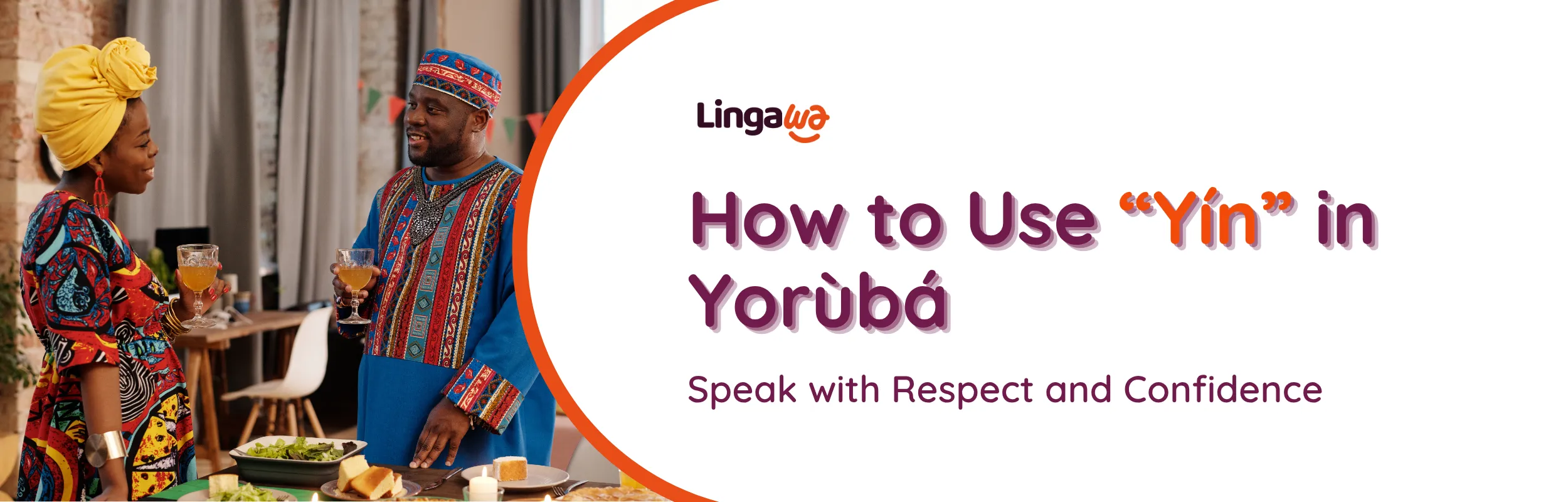
How to Use “Yín” in Yorùbá — Speak with Respect and Confidence
Respect is everything in Yorùbá culture—and the way you speak reflects that. Whether you’re greeting an elder, asking a stranger a question, or addressing a group, choosing the right pronoun shows more than good manners. It shows you understand the heart of the language.
At Lingawa, we’re here to make Yorùbá easier (and more fun) to learn. Today, let’s break down one powerful word that can instantly level up how respectfully you speak Yorùbá: “Yín.”
👂 What Does “Yín” Mean in Yorùbá?
“Yín” is the respectful or formal form of “you” in Yorùbá.
You use “yín” when speaking to:
- 👴🏾 Elders
- 🧑🏽🤝🧑🏽 Groups of people
- 🎓 Strangers or people you want to show respect to
The informal version of “you” is “ẹ” (sometimes written as “ẹ́” when stressed). This version is more casual and used with peers, friends, or children.
💬 Examples: When to Use “Ẹ” vs “Yín” in Yorùbá
🧒🏾 Talking to Someone Younger or Your Peer: Use “ẹ”
Example:
Kí lórúkọ ẹ? – What is your name? (informal)
Use this with your sibling, a friend, or a child.
👵🏾 Talking to an Elder or Group: Use “yín”
Example:
Kí lórúkọ yín? – What is your name? (respectful)
Want to add extra politeness? Say:
“Kí lórúkọ yín, sir?” or “ma?”
💡 Yorùbá is a tonal language, so don’t forget the pronunciation makes a difference too!
🎁 Respect Still Counts in Other Verbs Too!
Even when you’re not directly saying “you,” how you refer to the person changes depending on respect. Let’s look at giving something, for example:
- Informal:
Mo fún ẹ. – I give/gave you (peer/younger) - Formal:
Mo fún-un yín. – I give/gave you (respectfully)
The “-un” adds emphasis, making the tone even more polite.
🎥 Watch It In Action
Still unsure when to use “ẹ” vs “yín”?
Watch this quick Lingawa tutor video lesson where we break it down with pronunciation, role-play, and tips to make it stick.
👉 Click here to watch on Instagram
🎧 Practice along out loud—it makes all the difference!
🧠 Quick Quiz: Can You Spot the Right Usage?
Choose the more respectful option in each scenario:
- You’re meeting your friend’s grandmother:
a) Kí lórúkọ ẹ?
b) Kí lórúkọ yín? - You’re helping a younger cousin with their bag:
a) Mo fún yín.
b) Mo fún ẹ.
(Answers: 1 = b, 2 = b!)
📘 Want to Learn More Yorùbá?
Respectful speaking is just the beginning. At Lingawa, we teach you the cultural and conversational skills that bring Yorùbá to life—one word at a time.
✅ Bite-sized lessons
✅ Real tutors
✅ Real-life usage
✅ Cultural confidence
Join us today and start speaking Yorùbá like someone who truly understands the heart of it.